Cirurgia Geral, Ortopédica, Oftálmica, Reconstrutiva........
Canine and Feline Arthrology and Arthroscopy
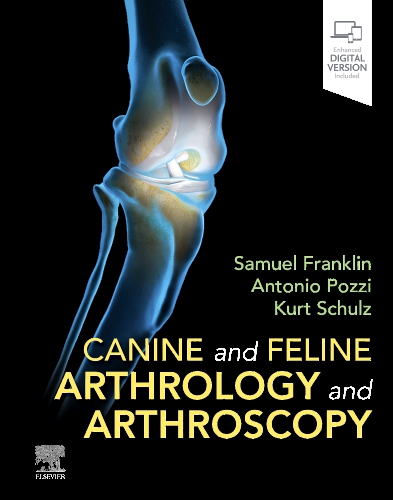
De: Kurt Schulz & Sam Franklin & Antonio Pozzi
ISBN: 9780323712552
2026, Elsevier
Capa dura
Páginas: 1440
Cirurgia Geral, Ortopédica, Oftálmica, Reconstrutiva........
De: Kurt Schulz & Sam Franklin & Antonio Pozzi
ISBN: 9780323712552
2026, Elsevier
Capa dura
Páginas: 1440
Get expert guidance on performing arthroscopy and advanced joint surgery in small animals! Canine and Feline Arthrology and Arthroscopy presents basic and advanced arthroscopic, arthroscopic-assisted, and state-of-the-art open techniques for the management of joint disease in dogs and cats. Clear discussions of relevant topics include equipment, diseases, anatomy, and surgical treatment options. Multiple techniques for the same condition highlight key differences and explore their advantages and disadvantages. This comprehensive approach empowers the surgeon to understand the options available for treating a diverse array of medical conditions.
Key Features
Part I. General Principles of Arthroscopy
1. Introduction to Arthroscopy
2. Fundamentals of Arthroscopy Practice - Workflows and Checklists
3. Equipment
4. Complications and Frustrations
5. Arthroscopic Skill: Teaching and Learning
6. Second Look Arthroscopy
7. Needle Arthroscopy
Part II. Foundations of Arthroscopic Management
8. Structure and Function of Diarthrodial Joints
9. Biology and Assessment of Articular Cartilage
10. Pathophysiology and Treatment of Osteoarthritis
11. Focal Cartilage Injuries
12. Complex Articular Surface Injury
13. Intra-articular Injectable Therapies
14. Pathophysiology and Treatment of Septic Arthritis
15. Arthroscopic-Assisted Management of Articular Fractures
16. Arthroscopic-Assisted Evaluation of Periarticular Neoplasia and Uncommon Arthropathies
17. Arthroscopy of Partial and Total Joint Replacements
Part III. Arthroscopic Management of the Shoulder Joint
18. General Principles of Shoulder Joint Arthroscopy
19. Osteochondrosis of the Shoulder Joint
20. Shoulder Instability
21. Diseases of the Biceps Brachii
22. Supraspinatus Tendinopathy
23. Lesions of the Caudal Glenoid
Part IV. Arthroscopic Management of the Elbow Joint
24. General Principles of Elbow Joint Arthroscopy
25. Elbow Osteochondrosis and Treatment
26. Medial Coronoid Process Disease (MCorD)
27. Medial Compartment Disease of the Elbow
28. Ununited Anconeal Process
29. Humeral Intracondylar Defects, Fissures, and Incomplete Ossification
30. Elbow Incongruence
Part V. Arthroscopic Management of the Carpus
31. General Principles of Carpal Arthroscopy
Part VI. Arthroscopic Management of the Coxofemoral Joint
32. General Principles of Coxofemoral Joint Arthroscopy
33. Arthroscopic Hip Assessment: Pre-Pelvic Osteotomy
34. Coxofemoral Joint Trauma
Part VII. Arthroscopic Management of the Stifle Joint
35. General Principles of Stifle Arthroscopy
36. Diagnostic Stifle Arthroscopy
37. Meniscectomy and Meniscal Repair
38. Lateral Compartment Disease of the Stifle
39. Osteochondrosis of the Stifle Joint
40. Patellar Luxation
41. Intra-articular Treatment of Cranial Cruciate Ligament Disease
Part VIII. Arthroscopic Management of the Tarsus
42. General Principles of Tarsal Joint Arthroscopy
43. Osteochondrosis of the Tarsus
44. Feline Arthroscopy
Kurt Schulz, DVM, MS, Diplomate ACVS, Department of Surgical and Radiological Sciences, University of California, Davis School of Veterinary Medicine, Davis, CA;
Diplomate, American College of Veterinary Surgeons Board Certified in Veterinary Surgery
Dr. Kurt Schulz served for nine years as an associate professor of small animal surgery at the University of California, Davis, CA. He was Chief of Surgery at the UC Davis Veterinary Medical Teaching Hospital for four years and the head of small animal orthopedic research.
He is a graduate of Cornell University and completed his residency at Virginia Tech. Dr. Schulz is a co-author of Small Animal Surgery, Small Animal Arthroscopy, and The Pet Lovers Guide to Joint Disease and Osteoarthritis and has published sixty-five peer reviewed scientific articles. He has also served on the veterinary faculty of Texas A&M University and was a veterinarian in the United States Peace Corps serving in the mountains and deserts of Morocco. Dr. Schulz has served on the examination committee for the ACVS and is an international speaker on small animal surgery. He lead an international program focused on outcomes, measures and evidence based medicine in small animal orthopedics. He lives in Burlington, Vermont with his wife and their two sons.
Samuel P. Franklin DACVSMR, MS, DVM, PhD, DACVS
Kansas City Canine Orthopedics
Dr. Franklin obtained a bachelor’s degree from the University of Virginia and a Master of Science from the University of Maryland before moving to Colorado. He earned his DVM cum laude from Colorado State University in 2007 followed by an internship at the University of Pennsylvania. He completed his surgical residency and PhD at the University of Missouri investigating the use of stem cells and bioabsorbable materials for biological hip replacement. He then spent 5 years at the University of Georgia as an associate professor of orthopedics and sports medicine before moving to Colorado Springs in 2018 to practice at Colorado Canine Orthopedics. Most recently he has returned to the Kansas City area in 2021 and has opened his own practice, Kansas City Canine Orthopedics. His expertise includes minimally invasive orthopedic surgery, joint replacement surgery, regenerative medicine with orthobiologics such as platelet-rich plasma and stem cells, musculoskeletal diagnostic imaging, and treatment of sporting dogs. He has published over 45 peer-reviewed journal articles, 8 book chapters, provided over 100 presentations at national and international meetings, and is co-editing a textbook on arthroscopy. He is a board-certified diplomate of both the American College of Veterinary Surgeons and the American College of Veterinary Sports Medicine and Rehabilitation and he is an ACVS Founding Fellow in the field of Minimally Invasive Orthopedic Surgery.
Prof. Dr. Antonio Pozzi Head of the Department of Small Animal Surgery, University of Zurich
Antonio Pozzi is the Director of the Clinic of Small Animal Surgery and head of the Small Animal Department at the University of Zurich. He completed an internship and residency at the Ohio State University. He became a Diplomate of the American College of Veterinary Surgeons in 2006 and a Diplomate of the American College of Sports Medicine and Rehabilitation in 2013. From 2007 to 2014 he worked at the University of Florida where he was appointed Associate Professor at the College of Veterinary Medicine and adjunct Professor at College of Medicine and College of Engineering. Since 2014 he worked at the University of Zurich, where he leads a team focusing on sport medicine, trauma and surgery. His special interests are canine sports medicine, minimally invasive surgery, regenerative therapies and joint surgery.